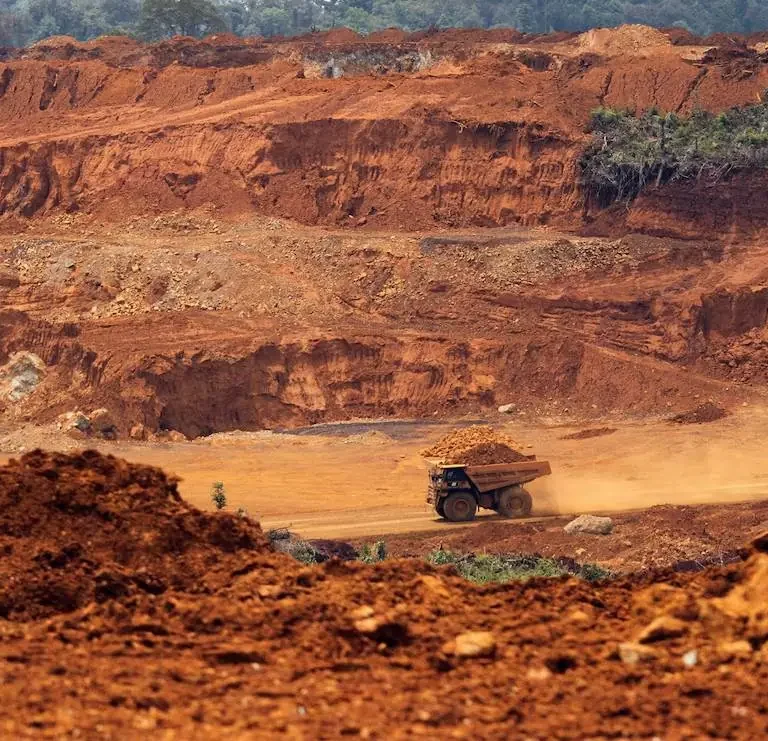
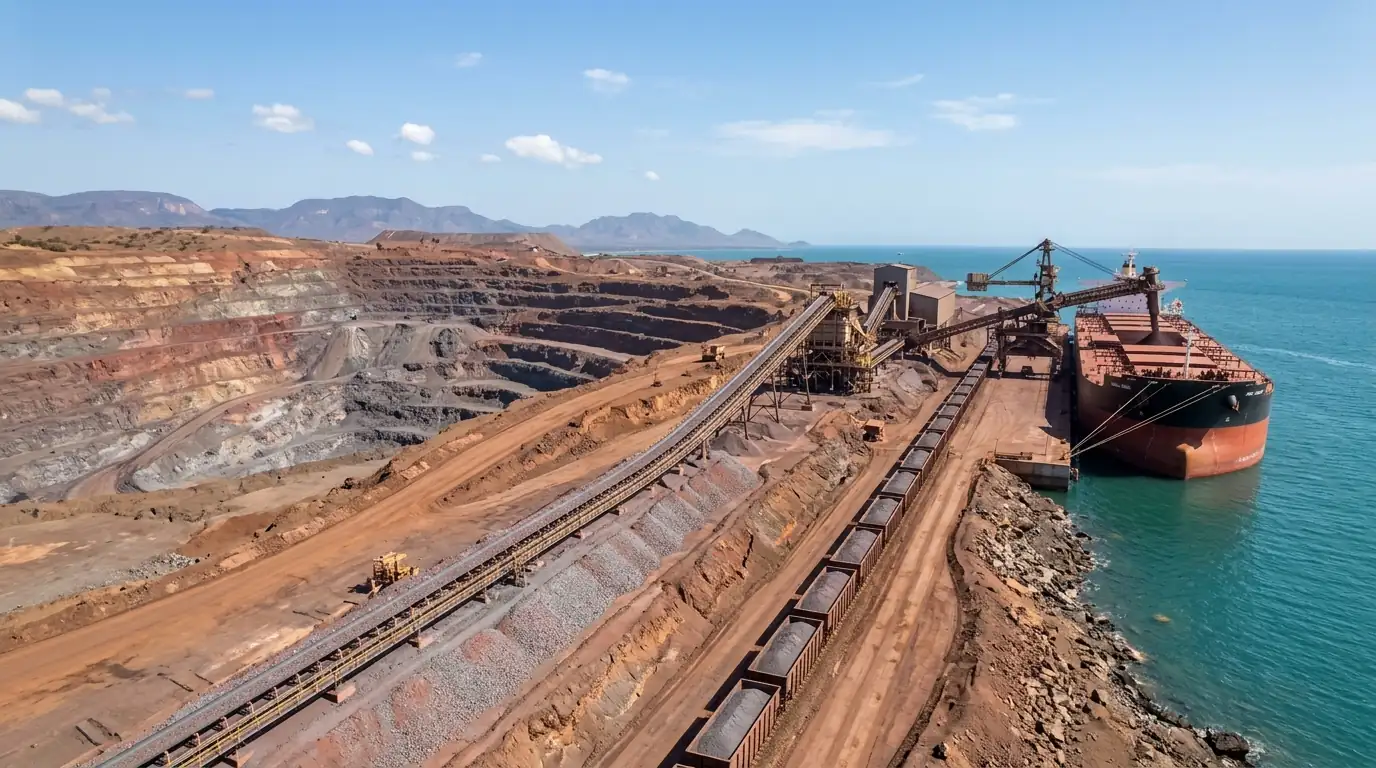
Guinea’s iron ore exports reached 8.9 million tonnes in the third quarter of 2026, up from about 6 million tonnes in the previous quarter. According to Guinean government data, the two consortia active in the Simandou project accounted for most of the exports: the Baowu-Winning consortium with 6.55 million tonnes and Simfer with 2.16 million tonnes. Rio Tinto has said it aims to reach a run rate of 60 million tonnes per year in the second half of 2028.
Bloomberg published these figures on November 3, citing Guinean government data.
| Exporter | Q3 exports (million tonnes) |
|---|---|
| Baowu-Winning consortium (China and Singapore) | 6.55 |
| Simfer (Rio Tinto and Chinalco partnership) | 2.16 |
| Others or unattributed (calculated difference) | about 0.19 |
| Total reported | 8.9 |
Simfer’s production rate
In its October 14 operational update, Rio Tinto said production at the Simfer mine, part of the Simandou project, reached 2.46 million tonnes in the third quarter (on a 100 percent basis), an annualized rate of about 10 million tonnes per year. Rio Tinto’s share of this output was 1.1 million tonnes. In the same quarter, 2.2 million tonnes were shipped from Simfer and 1.3 million tonnes of sales were recorded. At the end of September, 7.9 million tonnes of uncrushed ore were stockpiled at the mine and 11.1 million tonnes across the whole supply chain.
The export figure is the total of Guinea’s shipments in one quarter, while the annualized rate reflects the pace of production at a single mine over the same period. The two numbers should not be compared with each other.
Rio Tinto has said it aims to reach a run rate of 60 million tonnes per year in the second half of 2028. The Simfer mine is about 84 percent complete and the port and marine infrastructure about 92 percent. First ore from Simfer port and commissioning of one of the two main crushers are planned for the fourth quarter.
How the iron ore market has reacted
Bloomberg quotes Macquarie analysts as saying that Simandou’s growth has offset supply declines elsewhere; lower prices, high freight rates and diesel costs have put pressure on other producers. If the pace of October exports continues, Simandou’s exports across 2026 could reach about 28 million tonnes, provided the weather is favorable. Macquarie estimates seaborne iron ore supply growth in 2026 at about 14 million tonnes and the decline in Chinese output at 4.5 percent.
Iron ore prices are about 24 percent below the May peak and fell below $90 per tonne in October. According to UBS, at prices below this level up to 170 million tonnes of production becomes loss-making. Simandou’s reserves are reported at more than 2 billion tonnes with an iron grade of 66 to 68 percent.
Analysis of the Importance for the Iranian Market:
A larger supply of high-grade iron ore could strengthen the bargaining power of buyers in this segment. To gauge the effect on a specific shipment, compare sell offers on the basis of the price per dry tonne delivered to destination, iron grade and impurity penalties. The gap between the price of high-grade iron ore and the 62 percent benchmark also shows what premium the market pays for higher quality.
If export pricing or purchase contracts are referenced to global benchmarks, the fall from the May peak will also be reflected in producers’ selling margins. Its effect must be assessed for each shipment against that shipment’s freight cost and quality specifications.
Primary source: Bloomberg